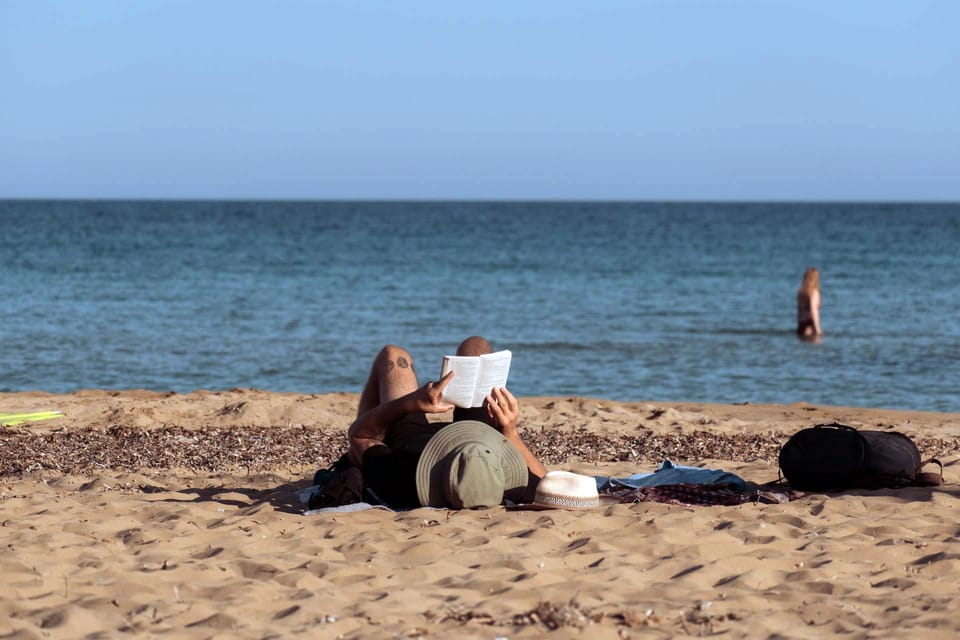
There is a particular quality to the light in a room where someone is truly reading. It falls differently, softer, as though the reader has drawn a boundary around themselves, a temporary shelter from the demands of the outside world. I first noticed this in my grandmother's house, where the afternoon light would filter through the curtains and settle on the pages of the book she was reading. She would sit for hours, turning the pages with a calm that seemed almost meditative, utterly absorbed in a world that existed only in the space between the covers.
For a long time, I took this for granted. Reading, in her world, was simply what one did. There was no urgency to it, no sense of accomplishment. It was a pleasure, a habit, a way of being.
It is only now, in a world of endless notifications and permanent connectivity, that I have come to understand what I was witnessing. It was not just reading. It was a form of attention, a discipline, a quiet rebellion against the demands of a culture that values speed above all else.
The Rise of Slow Reading
The term slow reading has been used in various ways, but at its core it describes a deliberate shift in how we approach the act of reading. It is not about speed, but about presence. It is the choice to read without distraction, to allow oneself to be absorbed, to resist the impulse to scan or skip or multitask.
The slow reading movement is part of a broader cultural reaction against the fragmentation of attention. For the first time in history, we are reading more than ever before, yet we are reading less. We read headlines, summaries, captions, tweets. We consume information in fragments, never quite allowing ourselves to be absorbed by anything fully.
Reading a book requires a different kind of attention. It asks for patience, for the willingness to follow a thought over many pages, for the trust that something will emerge. It asks us to be still. In a culture that equates busyness with value, this is a radical act. To sit quietly with a book is to reject, at least temporarily, the endless demand for engagement.
I spoke to a woman who has been running a slow reading group for several years. She described the pleasure of reading aloud, the experience of hearing the rhythms of the text, the shared immersion in a world created by words.
The practice is about rediscovering reading as a communal experience. In a world where reading has become increasingly solitary and increasingly digital, there is a value in slowing down, in sharing the experience. The readers take turns, a paragraph or a page, and the text is allowed to unfold at its own rhythm. They discuss what they have read, not as a formal analysis, but as a conversation, a way of thinking together.
The Resistance to Distraction
The impulse to check a phone, to glance at a screen, to respond to a notification, is so deeply ingrained that it has become almost impossible to resist. The slow reader is someone who has chosen to resist, to create a space in which the text is the only thing that matters.
It is a choice that requires effort, that goes against the grain of the culture. It is also a choice that offers a kind of freedom. The reader who can resist distraction is the reader who can truly enter a book, who can forget the world outside, who can be wholly present in the text.
Reading is a form of listening. It requires the same patience, the same willingness to be led, the same trust that what is being said is worth hearing.
The reader who reads slowly is like the listener who does not interrupt, who allows the speaker to finish before responding.
This resistance is not about nostalgia, not a longing for a simpler time that never really existed. It is a recognition that certain things are worth protecting. The ability to read deeply is one of those things.
The Texture of a Page
There is a tactile pleasure in the physical object of a book that cannot be replicated on a screen. The weight of the paper, the sound of the page turning, the smell of the ink. These are not incidental details. They are part of the experience of reading, part of what makes it a sensual, immersive act.
The slow reader is attuned to these details. The slow reader is not just absorbing information. The slow reader is entering a relationship with an object, with a history, with a set of possibilities that are not available in the digital realm.
A bibliophile I spoke to described the experience of owning an old book, the way the physical object carries the marks of previous readers. The notes in the margin, the inscription on the flyleaf, the crease on a page where someone stopped reading and set the book down. These marks are traces of presence, evidence that this book has been held, has been read, has been part of someone's life.
The slow reader is attuned to these traces, recognises them, values them.
The Medium and the Message
The philosopher Marshall McLuhan famously observed that the medium is the message. In the context of reading, this insight is particularly relevant. The way we read shapes what we read, shapes our understanding of what reading is, shapes the kind of attention we bring to the text.
The screen encourages a particular kind of reading: fast, fragmented, oriented towards information rather than absorption. The page encourages a different kind of reading: slower, more reflective, more open to the unexpected.
It is not that one is inherently superior to the other. They are simply different, and they produce different effects.
The slow reading movement is not a rejection of the digital but a recognition that the two modes exist
Each has its own value. It is a choice, an affirmation that the act of reading is not just about the information you receive but about the texture of the experience, the discipline of attention, the pleasure of being fully present in a text.
The Return of Attention
In the end, the movement towards slower reading is part of a broader cultural shift, a growing awareness of the costs of constant distraction and the value of sustained attention. The quiet reader in a room, absorbed in a book, is an image that has become increasingly powerful.
It is a reminder of what we lose when we fragment our attention, a reminder that the ability to read deeply is a skill that must be cultivated, a discipline that requires practice. The slow reader is not a nostalgic figure. The slow reader is a rebel, challenging the demands of a culture that values speed over presence.
I returned recently to the house where my grandmother used to live. The room was unchanged, the same curtains, the same light falling through the window. I sat in her chair with a book, and I read. Slowly. Deliberately. Without checking my phone. Without glancing at the clock. I felt the weight of the book in my hands, the texture of the paper, the rhythm of the words.
It was not a revelation. It was a small act of attention, a moment of presence, a reminder that there is a value in slowing down, that the act of reading is not just about the destination but about the journey, that the most important thing is not how much we read but how we read, how we attend, how we listen to the words that have been written for us, waiting to be read, waiting to be heard.